
It started with an invitation from my cousin.
She invited me to a Facebook group called LIFE on GUAM. I’m from Guam, so there was nothing particularly unusual about that. It’s a public group with almost 28,000 members, filled with pictures, memories and posts about the island.
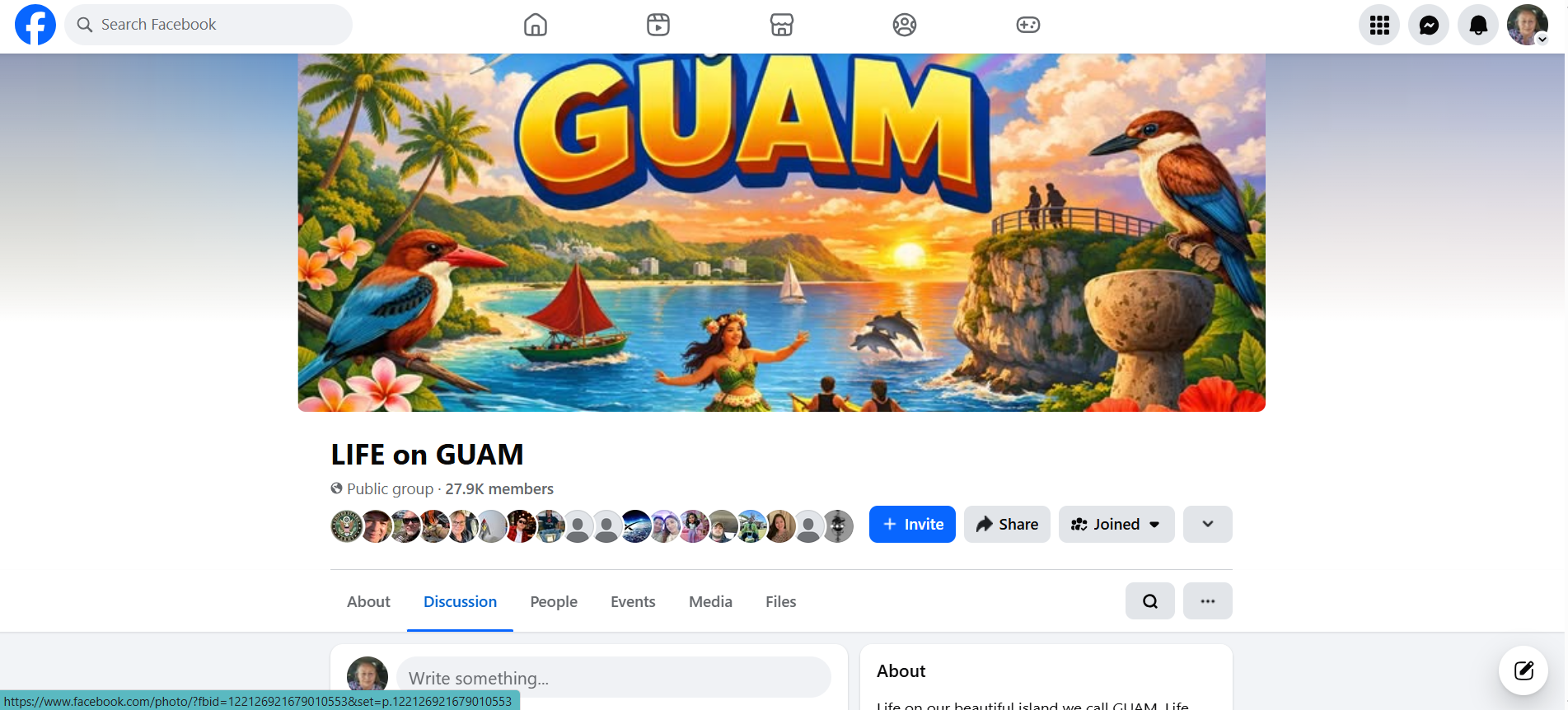
At first glance, it looks like exactly the kind of Facebook group I might enjoy.
But something didn’t feel right.
And when something online doesn’t feel right, I’ve learned not to ignore that little voice.
So I did something I wish more people would do before trusting a Facebook group:
I looked at who was running it.
Red Flag #1: Who owns the microphone?
I clicked over to the group’s People section and looked at the admins and moderators.
There were six:
Jenny Brown
Williams Robin
HERRY WALSH
Henry Jack
Jessica Jeli
Pinnacle Paws
Now, before somebody says it, let me say it first.
You cannot determine whether someone belongs in a Guam group by their last name.
My own maiden name is Hunt, and I’m Chamorro.
So no, the fact that I didn’t immediately recognize a Chamorro or Filipino surname among the administrators doesn’t prove anything.
But it made me curious.
And curiosity is where this little rabbit hole begins.
One strange thing isn’t proof. A pattern is different.
I started clicking profiles.
Jenny Brown’s Facebook username is @jenny.brown.207817.
Williams Robin is @williams.robin.901161.
Henry Jack is @henry.jack.589493.
Jessica Jeli is @jessicajeli.2025.
Again, none of that proves anything.
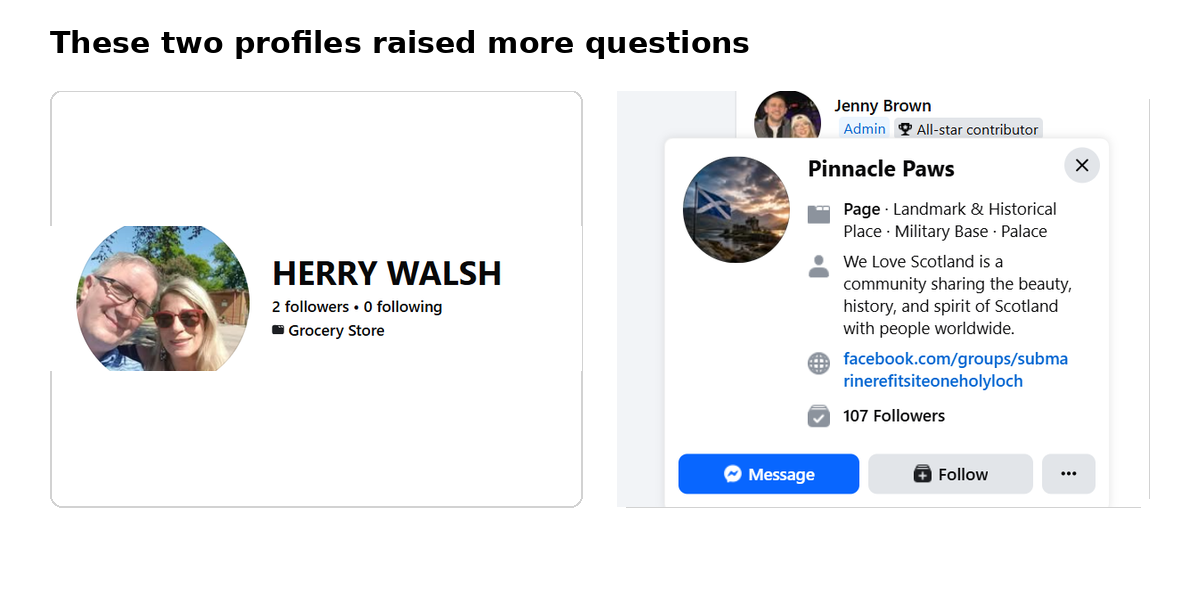
Then there was HERRY WALSH, who apparently identifies as a Grocery Store and has a whole two followers.
Okay…
And then I got to Pinnacle Paws.
Pinnacle Paws is categorized as a landmark and historical place. Its Facebook profile description said:
“We Love Scotland is a community sharing the beauty, history, and spirit of Scotland with people worldwide.”
Scotland.
I was looking at the administrators of a Facebook group about Guam.
Its profile information also points to Holy Loch, Dunoon, United Kingdom.
At this point, my eyebrow was officially raised.
So I kept looking.
Then Florida showed up. Sort of.
One of the admins, Williams Robin, is connected to another public Facebook group:
LIFE on FOLORIDA.
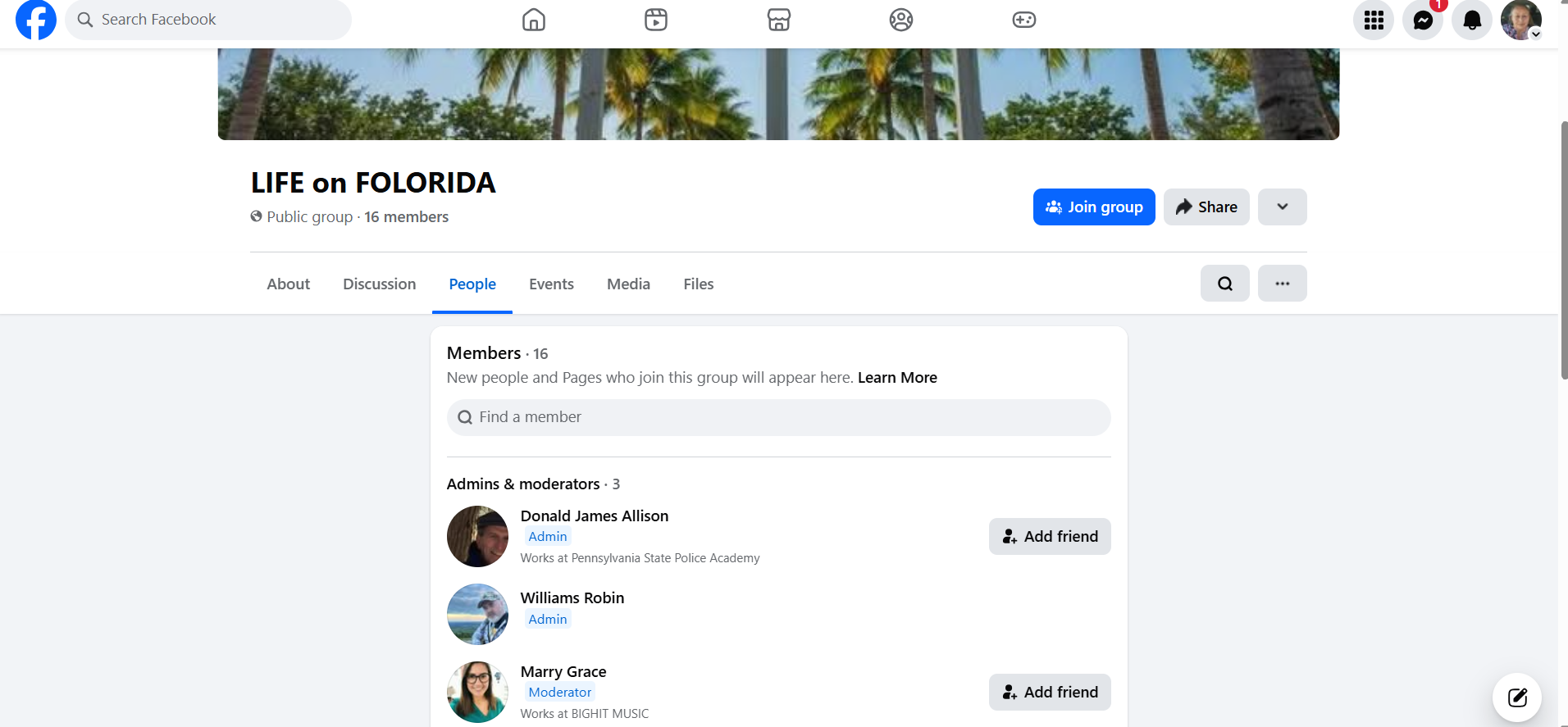
Yes. F-o-lorida.
The group may only have 16 members, but here’s where it gets interesting.
Williams Robin is an administrator.
And among the members?
Henry Jack.
Jenny Brown.
Jessica Jeli.
Those names should sound familiar.
They’re also administrators of LIFE on GUAM.
Now we aren’t looking at one strange profile anymore. We’re starting to see the same accounts appearing together elsewhere.
So I kept following the trail.
And then I found another Guam group.
Back inside LIFE on GUAM, Jenny Brown had posted an invitation encouraging members to join another community:
Guam’s Beaches & Sunsets
That group has about 2,800 members.
Guess who runs it?
Jenny Brown.
Williams Robin.
HERRY WALSH.
Henry Jack.
Jessica Jeli.
Five of the six administrators from LIFE on GUAM are also the five administrators of Guam’s Beaches & Sunsets.
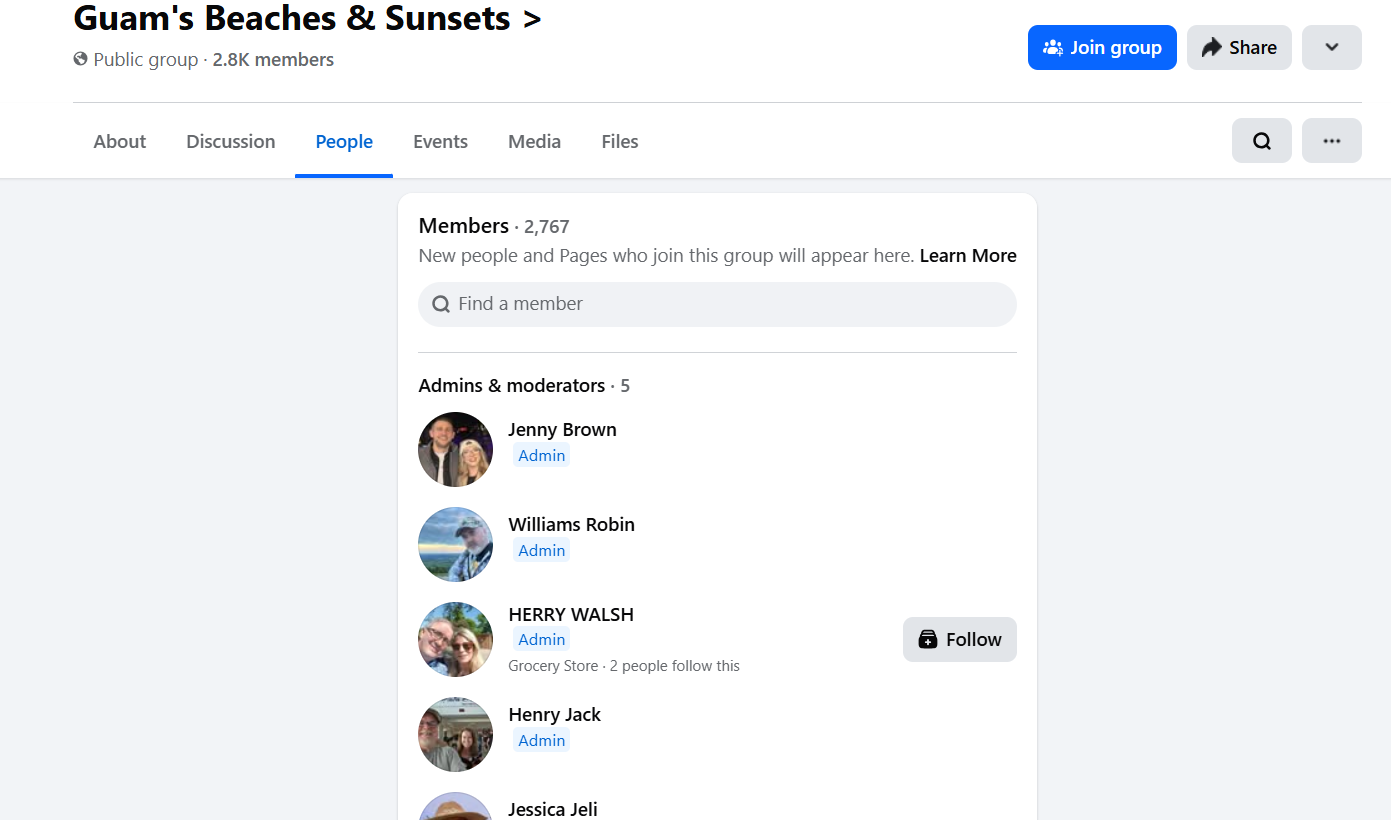
Now that is a pattern.
Does any of this, standing alone, prove these people are scammers?
No.
And that’s important.
One weird profile isn’t proof of a scam.
A strange username isn’t proof.
A misspelled group name isn’t proof.
A Scotland page administering a Guam group isn’t proof.
The same accounts controlling multiple groups isn’t proof either.
But when oddities begin piling up, you don’t have to wait until someone steals your money or identity to become suspicious.
You investigate.
This is where most people get fooled
A Facebook group with almost 28,000 members feels legitimate.
There’s safety in numbers, right?
Not necessarily.
We tend to look at the number of members and think:
Twenty-eight thousand people are in here. Somebody must have checked this out.
But who?
Most of us don’t check the administrators before joining a Facebook group.
We don’t click their profiles.
We don’t look at what other groups they’re running.
We don’t notice when the same handful of accounts keeps popping up in supposedly unrelated communities.
We see a familiar subject, maybe an invitation from somebody we know, and we click Join.
That’s exactly how I ended up here.
My cousin invited me.
Of course I trusted my cousin.
But my cousin wasn’t the person running the group.
That’s an important distinction.
And I hadn’t even looked at what they were posting yet.
Remember, everything I’ve told you so far came from doing little more than clicking People and following what Facebook itself showed me.
I hadn’t followed any suspicious links.
I hadn’t purchased anything.
I hadn’t entered personal information anywhere.
I hadn’t done anything particularly technical.
I just looked.
And then I started looking at what these accounts were actually posting to those nearly 28,000 people.
That’s when this rabbit hole got a whole lot deeper.
Continue to Part 2 of The Anatomy of a Suspected Facebook Group Scam: Engagement Is the Bait.
We’re going inside the posts.
And I’ll show you why something as innocent as:
“Share your favorite photo of Guam!”
might deserve a second look.
And please share this with your friends and family, especially the people who spend time in Facebook community groups.
You don’t have to understand every scam to protect yourself. Sometimes the most valuable thing you can learn is simply where to look and what questions to ask.
Want to follow the investigation? Subscribe and I’ll send you the next part when it’s published.
The Anatomy of a Suspected Facebook Group Scam
This is Part 1 of a four-part investigation.
Part 1: Who’s Running the Show? (You are here)
Part 2: Engagement Is the Bait
Part 3: Follow the Money
Part 4: Coming soon
A note about this investigation: This series documents publicly visible Facebook activity and other publicly available information I found while investigating these groups and related activity. I’ll distinguish between what I can verify, what raises questions, and what is simply my opinion or a theory worth exploring. A red flag is not proof of wrongdoing, and inclusion in this series should not be interpreted as an allegation that any individual or business has committed a crime or engaged in fraud.
If this series helps one more person stop, look, and investigate before clicking a link, handing over information or spending money, it’s worth sharing.
Knowledge is power. Pass it on.


 MeShawn Dimos
Leave a comment